
What is a Double Stage Pulverizer Machine and How Does It Work?
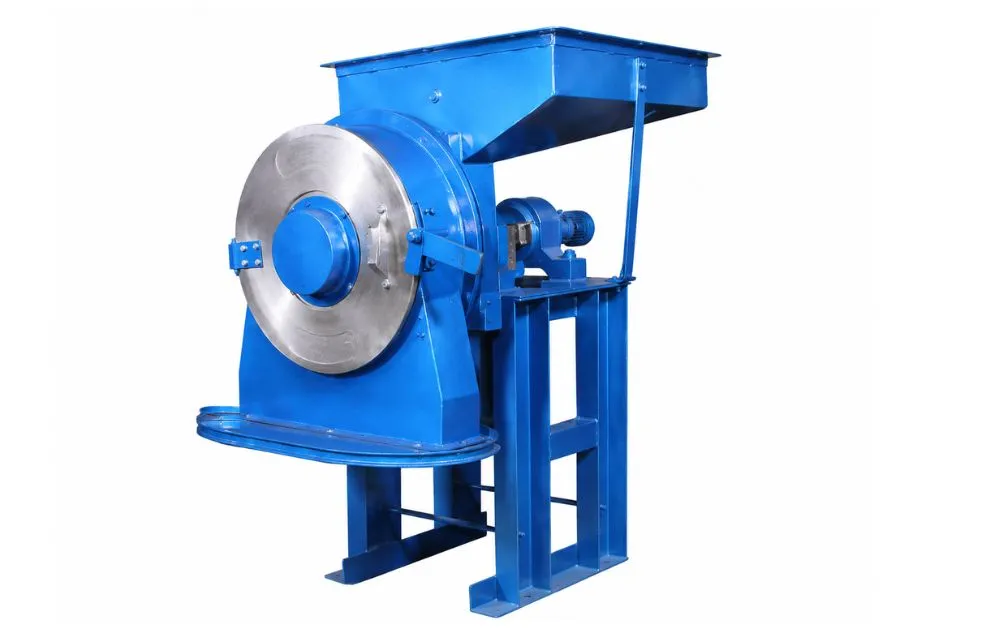
Among the most capable size reduction solutions available to industrial manufacturers and recyclers, the Double Stage Pulverizer Machine is engineered to deliver ultra-fine particle output from a wide range of solid materials — making it a critical piece of production equipment for plastic recycling operations, chemical processing plants, rubber manufacturing, and specialty material processing facilities across the UAE and wider GCC industrial sector. Understanding how the double-stage design delivers its performance advantages, and where this technology best applies, enables procurement and engineering teams to make confident specification decisions.
The Engineering Principle of Double-Stage Size Reduction
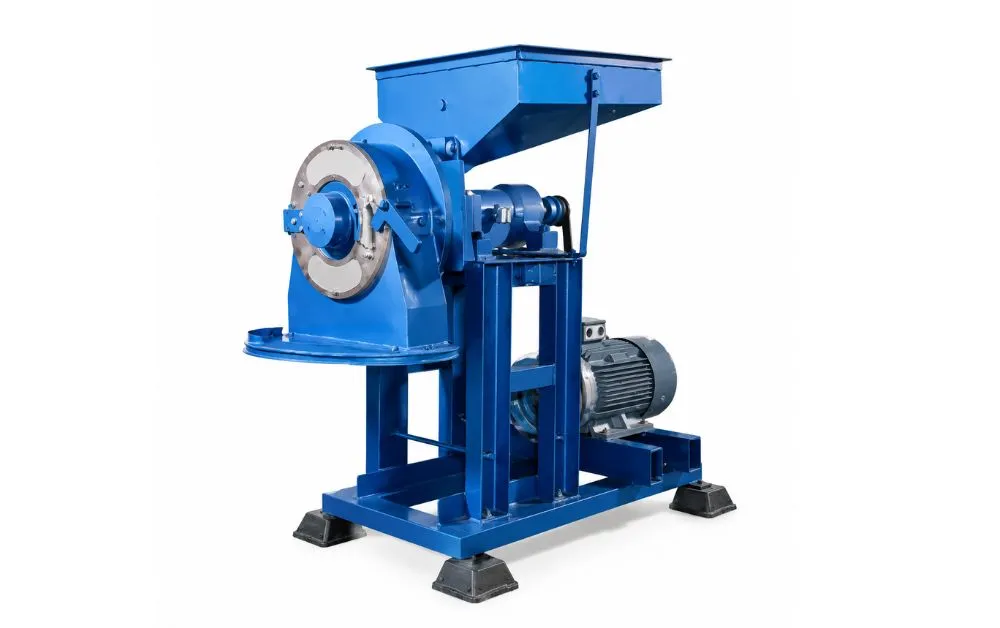
A double-stage (two-stage) pulverizer processes material through two sequentially arranged reduction chambers, each fitted with high-speed rotating blades, hammers, or disc assemblies. This series arrangement differs fundamentally from a single-stage machine that attempts all size reduction in a single pass. The engineering advantage of the two-stage approach is that each chamber can be optimized independently for its specific reduction task — the first stage for coarse breakdown, the second for fine grinding — producing finer, more uniform output with better energy efficiency than attempting single-stage reduction to the same target particle size.
Stage 1: Coarse Reduction
Raw material — typically plastic granules, rubber scrap, chemical pellets, or resin lumps — is fed through a hopper into the first reduction chamber, where high-speed rotating blades or hammer elements impact the material repeatedly, breaking it progressively into coarse particles. A classification screen at the exit of the first chamber controls the maximum particle size leaving this stage — ensuring only material that meets the first-stage output specification passes through to the second stage.
Stage 2: Fine Grinding
Coarse particles from the first stage enter the second reduction chamber, which is configured for fine grinding at the required target particle size. The second chamber typically operates at higher rotational speeds than the first, using finer blade or disc profiles optimized for fine grinding rather than coarse breaking. A second classification screen controls the final output particle size — material that has not yet reached target size continues circulating within the chamber until it does.
Thermal Management
High-speed size reduction generates substantial heat through mechanical impact and friction, which can be problematic for thermally sensitive materials like PVC and LLDPE — softening them and causing particle agglomeration rather than clean size reduction. Quality double-stage pulverizer designs address this through integral water-cooled grinding chamber jackets, air cooling of the material between the two stages, and rotor designs that minimize heat generation per unit of size reduction achieved. Effective thermal management is essential for producing free-flowing, non-agglomerated powder from temperature-sensitive polymers.
Related read:-What Are the Differences Between Single and Double Stage Pulverizer Machines?
Primary Industrial Applications
- Plastics recycling: Converting PVC, HDPE, LLDPE, and engineering polymer scrap and off-spec granules into fine powder for rotational moulding, powder coating, and compounding applications. The consistent particle size distribution achieved is critical to the quality and processing characteristics of downstream products.
- Rubber powder production: Processing scrap tyre rubber and industrial rubber offcuts into fine rubber powder for sports surfaces, road construction materials, and rubber moulded products — a growing application as UAE sustainability initiatives drive rubber recycling infrastructure investment.
- Chemical processing: Grinding resins, waxes, agricultural chemical granules, and specialty chemicals to mesh sizes required for effective product application performance across their respective end-use markets.
Advantages Over Single-Stage Alternatives
The double-stage design consistently produces finer particle sizes — typically down to 40–80 mesh and beyond — than single-stage machines of equivalent power rating. Narrower particle size distribution in the output powder improves the processing consistency and quality of downstream applications. Higher energy efficiency per kilogram of output at fine particle sizes reduces operating costs at the throughputs required for commercial production. Reduced requirement for screening and re-processing of oversized particles improves overall line efficiency and reduces material losses. providing the consistent fine powder output that UAE manufacturers and recyclers depend on for competitive, high-quality production.
Conclusion
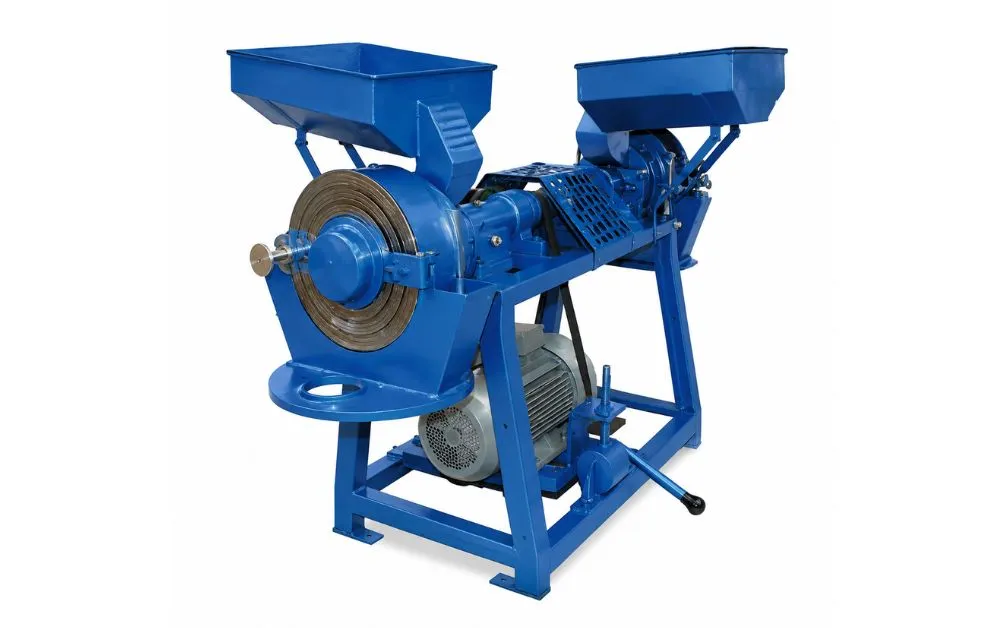
The Double Stage Pulverizer Machine delivers genuinely superior size reduction performance across demanding industrial applications — producing finer particles, achieving more uniform size distribution, and operating with better energy efficiency than conventional single-stage alternatives at the throughput rates required for commercial-scale production. For UAE and GCC industrial operators who require consistent fine powder output from plastic, rubber, or chemical feedstocks, the double-stage design represents the technically and economically optimal specification.
