
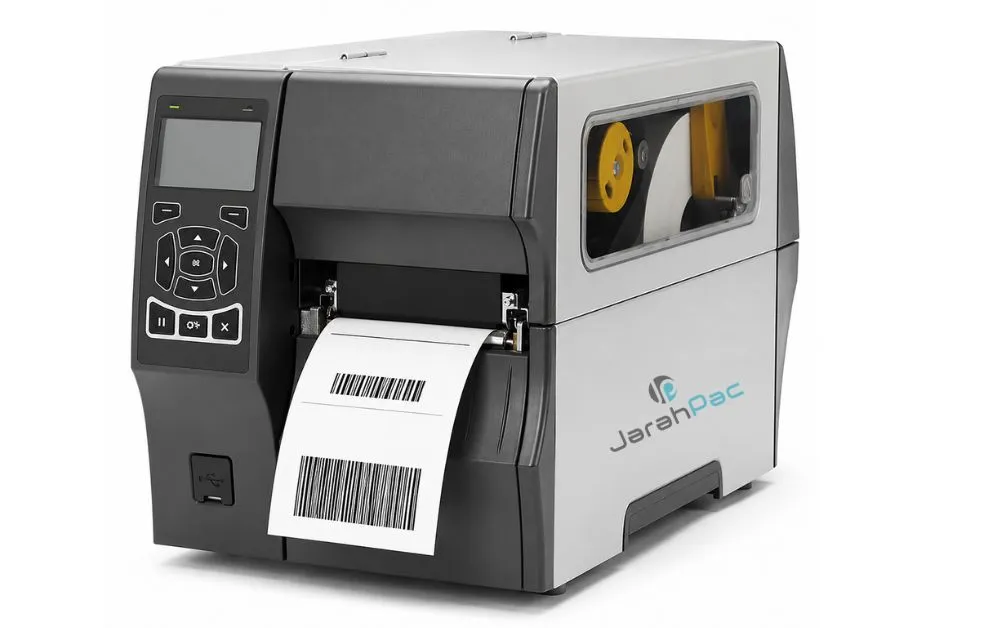
Top Features to Look for in a Thermal Label Printer
Businesses across the UAE are investing in professional labelling infrastructure to meet the growing demands of modern supply chains, retail compliance requirements, and customer expectation for accurate, high-quality product information — and understanding what distinguishes a genuinely capable thermal label printer in UAE from an underspecified alternative requires looking beyond basic print quality to the features that drive long-term operational efficiency, system integration capability, and total cost of ownership across the product’s service life.
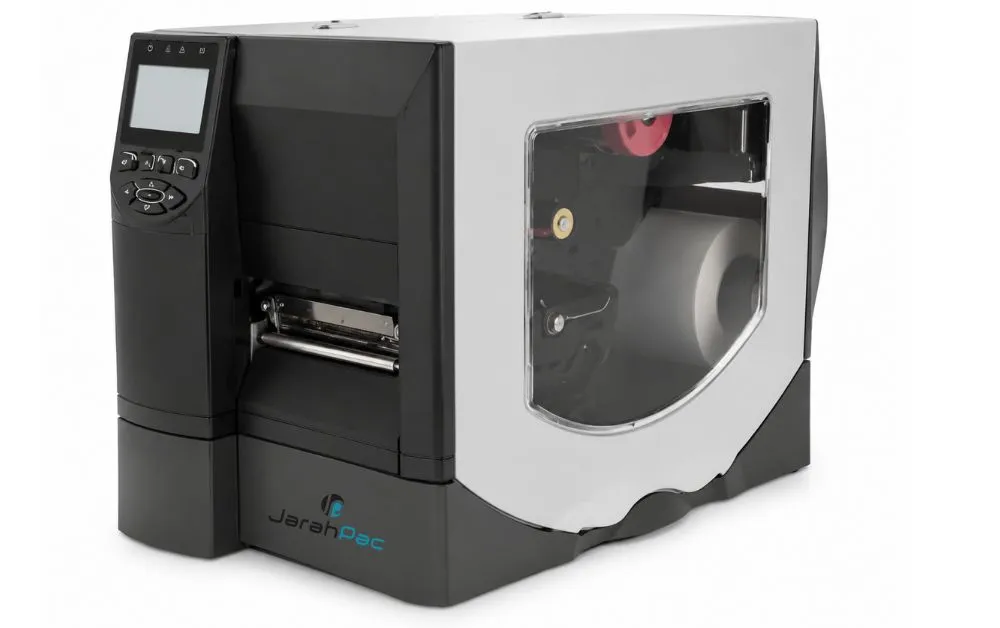
The Technology: How Thermal Printing Works
Thermal label printers produce images on labels using one of two distinct heat-based mechanisms. Direct thermal printing uses heat-sensitive label media that darkens when the printhead element contacts it — no ribbon is required, making this the simplest and most consumable-efficient technology for short-duration labels where long-term durability is not required. Applications include shipping labels, food date labels, receipts, and temporary identification tags.
Thermal transfer printing uses a ribbon — a thin film coated with wax, resin, or wax-resin compounds — where the printhead selectively melts ribbon coating onto the label surface, producing a durable, permanent image. Thermal transfer labels resist heat, chemicals, moisture, abrasion, and extended UV exposure, making this the technology of choice for asset identification, product labels with long shelf lives, outdoor applications, and any labelling application requiring durability beyond a few weeks.
Print Resolution: Matching DPI to Your Application
Resolution is measured in dots per inch (DPI). For standard logistics and shipping labels with large barcodes and readable text, 203 DPI is entirely sufficient. For applications requiring small barcodes that must scan reliably, fine-pitch text, or intricate graphics — pharmaceutical labelling, electronics component identification, jewellery tags, and healthcare applications — 300 DPI is the standard minimum, and some applications require 600 DPI for truly fine print quality.
Print Speed: Throughput vs Quality Balance
Print speed is measured in inches per second (IPS) or millimetres per second. Desktop printers typically offer 4–8 IPS — adequate for office and low-volume retail applications. Industrial printers operate at 8–14+ IPS, enabling continuous, high-volume label production without bottlenecking production lines. In high-throughput operations, the productivity difference between a 6 IPS and 12 IPS printer is significant over the course of a production shift.
Find out more-How Do Thermal Label Printers in UAE Help Businesses Comply with Regulations?
Connectivity and System Integration
Modern thermal label printers must integrate seamlessly with your existing business systems. Ethernet (wired network) connectivity is standard for warehouse and production floor deployments. Wi-Fi enables flexible label station placement without cabling infrastructure. USB connections serve desktop and low-volume applications. Bluetooth supports mobile and portable labelling scenarios. For enterprise applications, verify compatibility with your ERP or WMS through standard command languages — ZPL (Zebra Programming Language), EPL, and TSPL are the most widely supported industrial printer languages. RFID encoding capability is increasingly important for supply chain track-and-trace and asset management applications.
Durability and Build Quality for UAE Operations
UAE warehouse and manufacturing environments are demanding — high ambient temperatures, fine dust, and intensive daily use test printer durability significantly. For production floor and warehouse applications, specify industrial-grade printers with all-metal frames, reinforced media path mechanisms, and printheads rated for high-mileage operation. For office and retail applications where environment is controlled, desktop models offer an appropriate cost-performance balance. Printhead protection — from improper media, contamination, and physical damage — is a key operational cost driver to manage through correct media specification and routine maintenance. Working with a UAE-based consumables supplier who can provide same-day or next-day delivery of labels and ribbons ensures your printing operation never faces unplanned production downtime due to consumable shortages — a critical operational consideration for high-volume environments where label printing directly constrains overall line throughput. The right supplier relationship encompasses initial equipment supply, ongoing consumable management, technical support, and rapid response to the operational issues that inevitably arise over the product’s multi-year service life in a demanding production environment.
Conclusion
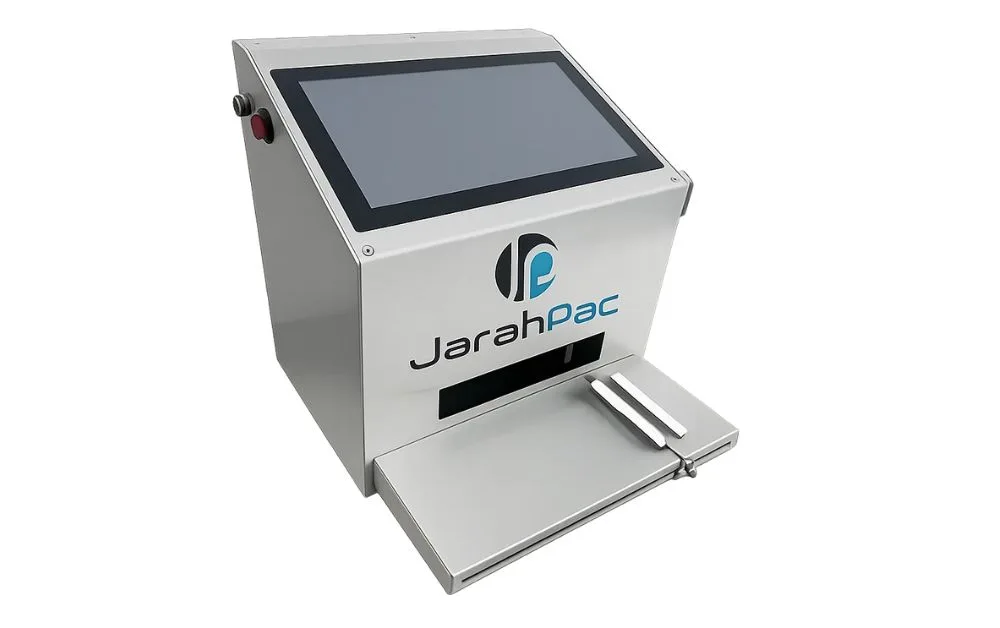
Selecting the right Thermal Label Printer in UAE means precisely matching the technology — direct thermal or thermal transfer — the resolution, speed, connectivity, and build quality to your specific application requirements. A printer specified too lightly for its operating environment will generate disproportionate maintenance costs and downtime. A printer over-specified for a simple application wastes capital that could be better deployed elsewhere. Take the time to define your requirements clearly, and work with a supplier who understands both the technology and your operational context.
